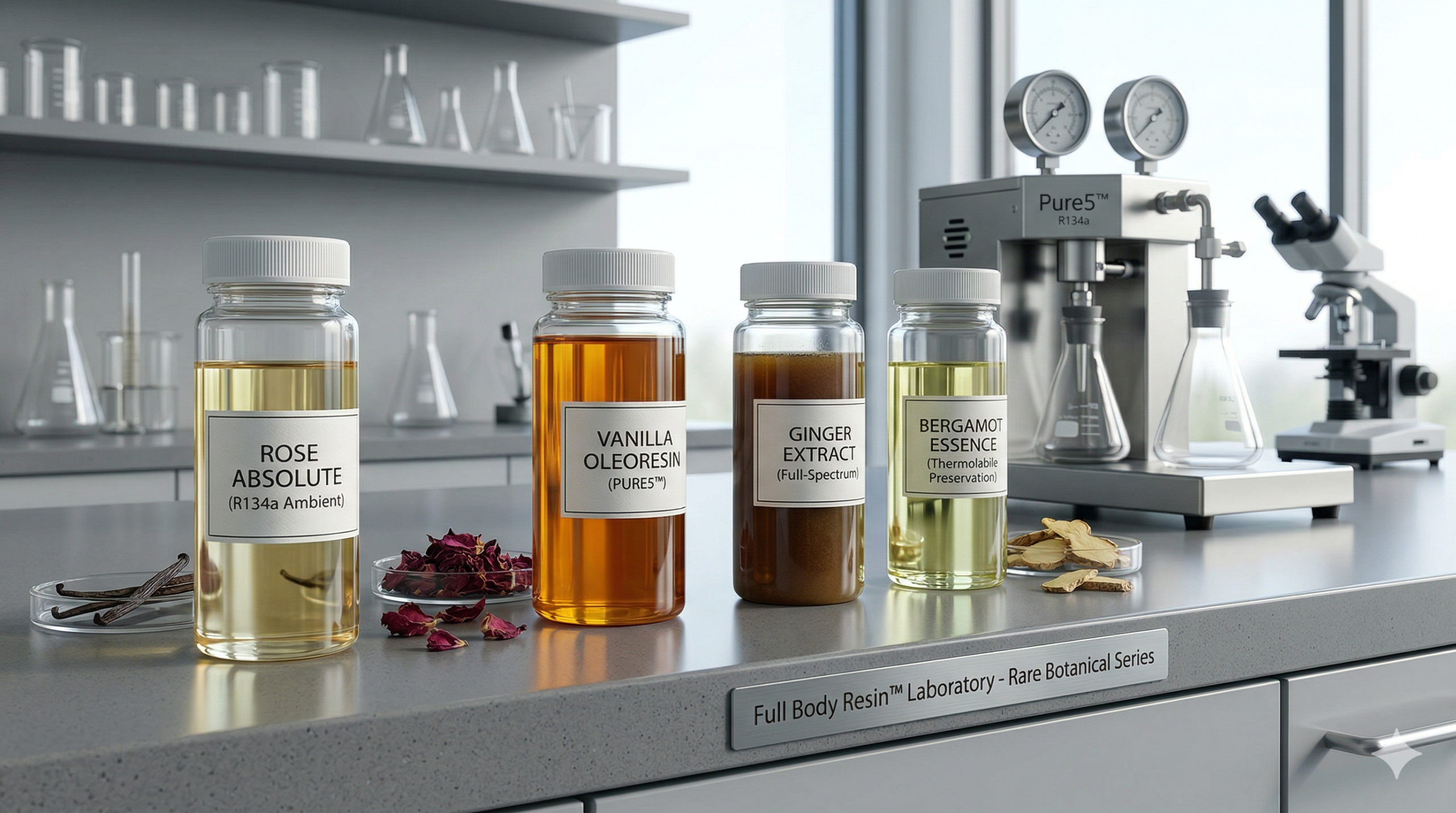
Applying high-fidelity extraction to vanilla, rose, ginger, and other high-value medicinal plants.
While the cannabis and hemp industries have undeniably accelerated the evolution of modern extraction hardware, they represent only a fraction of the global botanical market. For centuries, the flavor, fragrance, and nutraceutical industries have relied on high-value medicinal plants and flowers. Yet, despite technological advancements, the extraction of these rare botanicals is still largely dominated by archaic, destructive methodologies.
When dealing with the delicate microbiology and phytochemistry of Vanilla planifolia (vanilla), Rosa damascena (rose), or Zingiber officinale (ginger), legacy solvents and extreme temperatures are catastrophic. They obliterate the fragile secondary metabolites that give these plants their value.
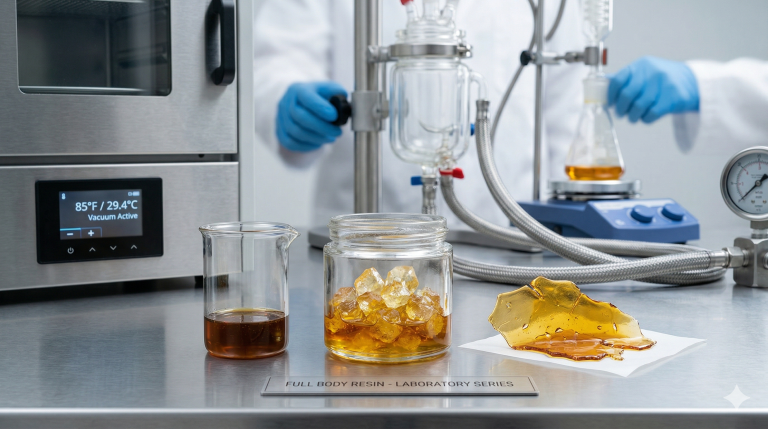
At Full Body Resin, we believe that bridging the gap between organic chemistry and commercial profitability requires a paradigm shift. We must move beyond the limitations of steam and hexane, and embrace the science of ambient, high-fidelity R134a extraction.
The Microbiological Challenge of Rare Botanicals
In medicinal plants and flowers, essential oils, terpenes, and flavonoids are not uniformly distributed. They are synthesized and stored in specialized microscopic structures: glandular trichomes, oil cells (idioblasts), and secretory ducts.
From a microbiological perspective, these structures are highly sensitive. The compounds within them—thermolabile terpenes, complex esters, and delicate phenolic aldehydes—exist in a state of fragile equilibrium. The moment a plant is harvested, enzymatic degradation and oxidation begin.
The goal of a true “full-spectrum” extraction is to rupture these cellular structures and capture the compounds exactly as they existed in the living plant. Unfortunately, traditional extraction methods act as a blunt instrument rather than a precise chemical scalpel.
The Limitations of Legacy Solvents in High-Value Botanicals
When extracting non-cannabis botanicals, the industry has historically relied on three heavily flawed processes:
- Steam Distillation (The Heat Problem): Used heavily for floral oils like rose and lavender. Steam subjects the biomass to temperatures exceeding 100°C. This causes immediate thermal degradation, hydrolyzing delicate esters and completely vaporizing highly volatile top notes. The resulting oil smells “cooked” and lacks the true aroma of the fresh blossom.
- Hexane & Petrochemicals (The Toxicity Problem): The standard for vanilla and jasmine absolutes. Hexane is highly toxic. While it extracts flavor well, removing the solvent requires aggressive heating and vacuum purging, which damages the profile. Furthermore, trace heavy-metal and petrochemical residues almost always remain, rendering the extract unfit for clean-label pharmaceutical or food-grade applications.
- Supercritical CO2 (The Co-Extraction Problem): While cleaner than hexane, pushing CO2 to supercritical pressures (often above 3000 psi) strips out heavy plant waxes, lipids, and chlorophyll alongside the target oils. This requires secondary refinement (winterization), further degrading the target compounds.
The High-Fidelity Solution: Ambient R134a Extraction
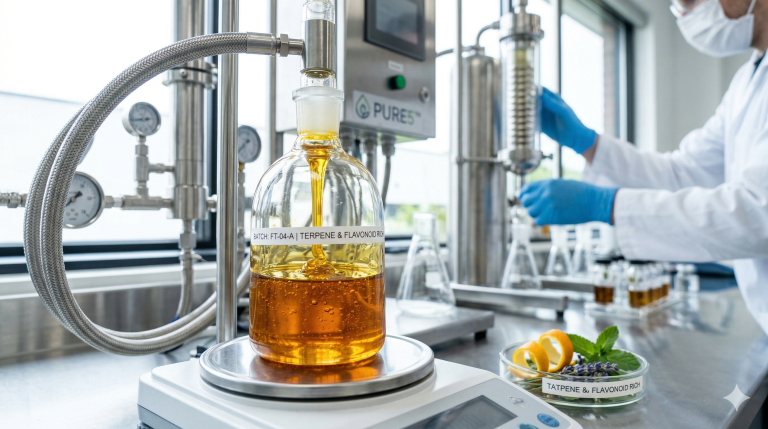
To achieve high-fidelity botanical extraction—where the final resin or oil is chemically identical to the living plant’s profile—we must remove thermal stress from the equation entirely.
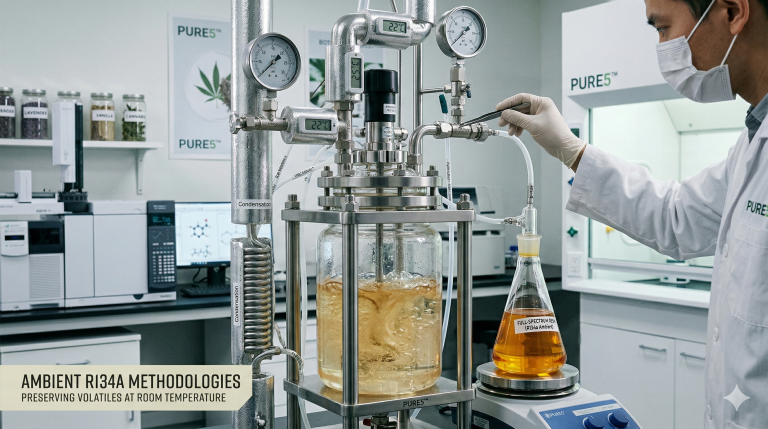
Ambient R134a (Tetrafluoroethane) methodology operates as a liquefied gas at room temperature (20°C to 25°C). Because its boiling point is exceptionally low, it targets the lipophilic (fat-soluble) essential oils and resins with perfect polarity, ignoring water and chlorophyll. Most importantly, it evaporates completely at room temperature, meaning zero heat is applied during the solvent recovery phase.
Here is how this low-pressure, ambient methodology revolutionizes the extraction of specific high-value botanicals:
1. Vanilla (Vanilla planifolia)
True vanilla extract contains over 200 distinct flavor compounds, not just primary vanillin. Hexane extraction damages these minor phenolic compounds, resulting in a “flat” flavor profile. By utilizing ambient R134a extraction through systems like PURE5™, extractors can pull a full-spectrum vanilla oleoresin that retains 100% of the minor aromatic esters. The result is a richer, vastly superior culinary and cosmetic ingredient with zero toxic residue.
2. Damask Rose (Rosa damascena)
Rose oil is one of the most expensive essential oils in the world, requiring thousands of pounds of petals to produce a single ounce. Steam distillation inherently alters the natural ratio of citronellol to geraniol due to heat stress, destroying the “fresh” scent of the flower. R134a gently washes the petals at room temperature, capturing the exact, uncompromised fragrance profile of the living rose—a holy grail for high-end perfumeries.
3. Ginger (Zingiber officinale)
The therapeutic value and spicy kick of ginger come from its gingerols. However, when exposed to the heat of traditional extraction or post-processing, gingerols rapidly dehydrate into shogaols, which alters both the flavor and the pharmacological effect of the extract. Ambient extraction preserves the raw gingerol profile identically to the fresh root, providing maximum efficacy for nutraceutical and medicinal applications.
Redefining Commercial Botanical Extraction
The flavor, fragrance, and holistic medicine markets are experiencing a massive shift in consumer awareness. Buyers are demanding clean-label, solventless-quality products that actually reflect the true essence of the botanicals they purchase.
By stepping beyond the boundaries of traditional cannabis methodologies and applying ambient R134a technology to the wider botanical world, commercial laboratories can produce unparalleled extracts. Preserving the exact microbiological and chemical fingerprint of the plant is no longer just a theoretical scientific goal—it is the new standard for commercial profitability.
*** To learn more about scaling high-fidelity botanical extraction for your facility, explore our deep-dive archives on [Equipment & Process Optimization] or discover the ambient technology powered by PURE5™.